


godaddy
New Member
ICANN Accredited Registrar
Domain Marketplace
Domain Broker
Hosting Provider
ICA Member
ISO 27001
- Joined
- Jan 26, 2009
- Messages
- 153
- Reaction score
- 12
Is selling online oversaturated? No way! It’s still very doable to make money from anywhere with a laptop. You just need to learn how to sell online and have the dedication to make it work.
This guide will give you proven methods for selling products and services online, with insights from people who make money on digital platforms. It also shares tips for building your own website and the secrets to selling with social media.
Here’s what we’ll be covering:
Before jumping in and making your first sale, there are a few key aspects of selling online and starting an official online store to learn before you start.
The biggest benefits of selling online include:
Online selling also has some potential drawbacks to consider:
Once you’ve brainstormed the products or services that you’d like to sell online, you’ll need to see if there’s a market for those products by performing market research. Market research includes:
Luckily, you don’t have to do this by hand. You can use market research tools like the following:
When using these tools, look for keywords and products that show consistent demand without overwhelming competition. This sweet spot indicates a market opportunity.
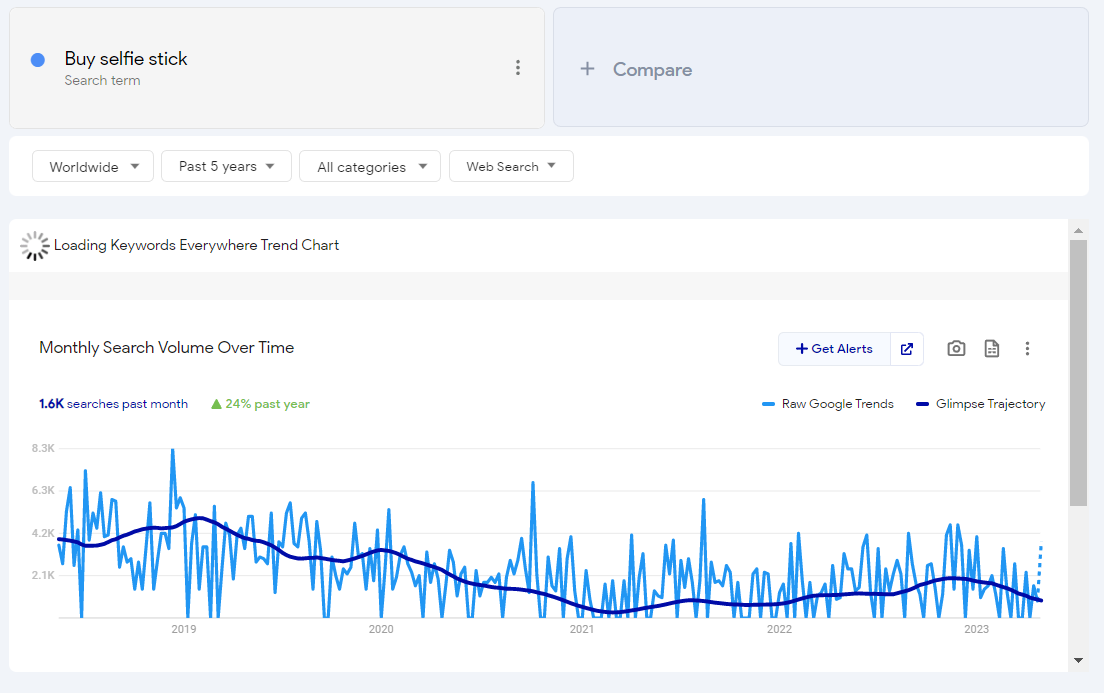
For example, if a search for “buy selfie stick” shows that searches for this product peaked in 2018 and have steadily declined in search volume, it’s probably not the product for you right now.
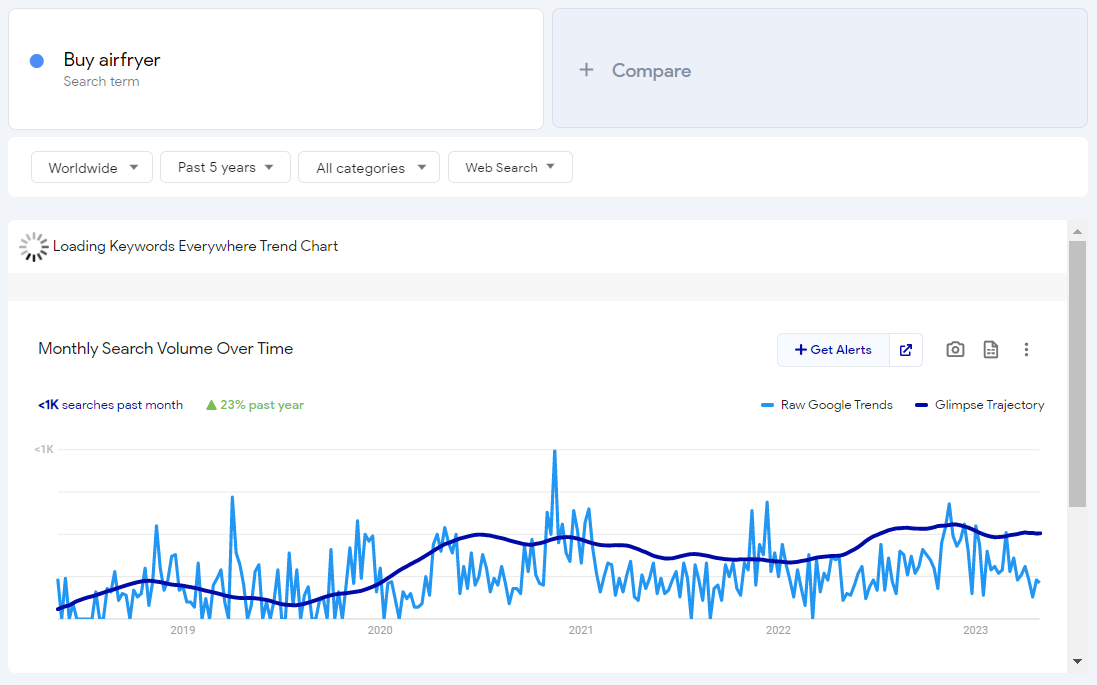
Searches for “buy airfryer,” on the other hand, increased in 2020 and have remained relatively stable ever since, so it may be a product worth considering.
If you’re starting your online selling venture from scratch, it’s best to start with a niche product or service.
Niching allows you to build an audience looking to solve a specific problem. You will get to know your buyer deeply, and only then can you provide them with all the reasons why your chosen product or service helps them.
Top tip: It will help if you genuinely like and believe in what you’re selling, especially if you’re going to sell on social media (more on that later).
Choosing the right product can make a big difference in how quickly your business gains traction. Focus on items that are:
Some product categories consistently show strong demand and revenue potential. These trending products can be a good starting point when deciding what to sell online.
Keep in mind that high-profit categories often come with higher competition.
Validating your product before investing in inventory helps reduce risk and improve your chances of success. A few simple steps can give you clearer direction and more confidence in your decision.
The key to choosing a platform (or platforms) is avoiding spreading yourself too thin. If you’ve done your market research thoroughly enough, you will already have an idea of where your audience is hanging out online.
Top tip: Consider your time. You are better off covering fewer platforms well than covering many badly. You can always scale later.
Editor’s note: If you’re in need of a good hosting package for your online store, GoDaddy has options that can fit within your business needs.
Once you’ve covered the above, it’s time to jump into your marketing plan. You’ll need to consider the buyer funnel. Think about the content you need to create to persuade prospective customers to buy from you. You will also want to build trust as part of your marketing strategy.
Top tip: Free sites like Reddit and Quora provide insight into your audience, their problems, their issues with competitors, and so much more. The same applies to Google’s People Also Ask.
Sticking with the idea of selling air fryers, a quick search of the word “air fryers” returns commonly asked questions about their pros and cons.

Now that you’ve got your marketing plan started, it’s time to choose a platform for selling online. There are multiple options to choose from, including building your own website, exploring marketplaces, and listing products on social media.
You can’t sell online without a digital store or platform. While you can sell on social media, an owned channel like a website can become an asset over time.
The main steps for setting up an online store are below. However, if you haven’t built an ecommerce website before, you may want to read this article for advice on how to start an online store, and this guide to choosing the best online store builder.
Check whether your desired domain name is available to buy online. Your domain name should be the same as your business name. It should be memorable, easy to spell, and relevant.
Create an online store using GoDaddy’s Website Builder and set up shop within a day. You can add products, take payments, and sell online from anywhere in the world.
GoDaddy Website Builder makes it easy to create a professional website. Choose a template, customize it your way, and get online fast — no tech skills required.
Start a free website
You need to integrate your online store with a payment gateway to accept payments. You’ll also need to connect it to a POS system if you also have a brick-and-mortar store. GoDaddy payment solutions allow you to sync inventory for both online and offline sales. The gateway you choose comes down to personal preferences, terms and conditions, and transaction fees.
PayPal is free to integrate, but it might charge a higher rate per sale. If you want to test your ecommerce store before committing to a gateway like Stripe, PayPal can be a good start.
Learn how credit card processing works
Inventory management is crucial for any ecommerce business. If you have physical products, your inventory must match what’s available online; otherwise, you risk selling more products than you have in stock, resulting in disappointed customers.
If you’re selling online and offline, stock inventory management can get more complicated because you must regularly update your online inventory. Larger businesses have inventory management systems for this, but as a start-up, you can sometimes manage inventory updates with good administration.
Shipping can get rather complex, especially if you’re planning on handling international orders. You need to think about shipping costs and how you’ll manage them. Some businesses choose to absorb shipping, so there’s no obvious cost to the buyer. Of course, if you do this, shipping costs should be factored into your product price.
Shipping calculations vary, but here are some options:
You can incentivize a purchase with free shipping and offer more expensive shipping options for faster delivery.
Top tip: Test your shopping experience before you start. You must ensure your prospective customers have a seamless experience from finding you to making a purchase. That means no broken checkout.
Marketplaces like Amazon, Etsy, eBay, and Craigslist offer excellent opportunities to reach a broad audience and sell your products. Service-based businesses can try Freelancer, Upwork, Toptal, and more.
You can sell on many of these marketplaces and your website. Naturally, each marketplace will take a percentage of the sale, so you’ll need to factor that in.
Any ecommerce brand should at least try out Amazon. It is a product search engine, so some of your buyers will go to Amazon before Google. To get started, read this Amazon beginner’s guide.
Pros
Cons
Etsy is a popular marketplace for crafts, handmade, and vintage products. It’s also an excellent marketplace for digital products like guides, ebooks, and more. Before learning the ins and outs of selling on Etsy, weigh these pros and cons:
Pros
Cons
eBay is one of the oldest ecommerce marketplaces. By now, most of us have probably sold (or tried to sell) something on it. If you haven’t explored the platform yet, check out this article for tips on how to sell on eBay.
Pros
Cons
Craigslist is also well-known. It’s a classified advertisements website that allows you to sell products locally.
Pros
Cons
Once your products or services are available to buy, your first task is to drive traffic to your site. Social media is a great place to build an audience and, importantly, a brand. Through social media, you get to know your audience, and they get to know you.
TikTok is a platform credited with a generous algorithm that provides accounts with excellent reach. As one of the fastest-growing platforms with over 1 billion users, your audience is likely hanging out there.
Mia Steele is a TikTok creator who began monetizing content in April 2022. She reports great success on the platform.
Steele says, “In less than six weeks of posting on TikTok and diving into User Generated Content (UGC), I began monetizing my content. I managed to replace my income by creating content and ads for brands.
Steele’s top tip for a successful social media account is, “Devote time to cultivate and nurture your own audience, so you can capitalize on the traffic to sell your own products.”
TikTok also has TikTok Shop, which you can access once you have 1,000 followers. TikTok Shop allows you to take a commission from items promoted and sold within your videos.
Like on TikTok, you can grow an audience on Facebook and Instagram and sell digital products. Facebook and Instagram also have Shop functionality to sell products directly on the platform.
These platforms allow you to post from Instagram to Facebook automatically, which can save you time.
You can learn how to sell on Facebook Marketplace here and how to sell on Instagram here.
Pinterest allows you to create a shoppable feed to list your products and sell them directly on the platform. You can also use Pinterest to drive traffic to your online store or blog.
Pinterest marketer Kayla Ihrig says, “The best way to make money on Pinterest is by making pins that lead to your services or products. Unlike other platforms where you need to constantly share valuable information to market your product or service, on Pinterest, users are searching for it and just want to be able to find it. Creators need to create images or videos (called pins) that display what they offer and then optimize them for search. Then, when a user searches for a solution to their problem, they find your content and go back to your website.”
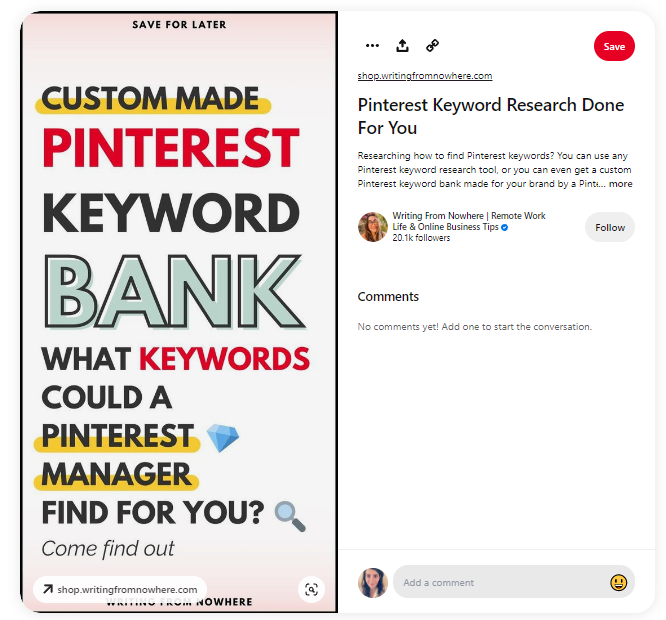
Ihrig’s pin, pictured below, is the perfect example of a pin that leads a user to her service-based site.
YouTube is the second-most-visited website in the world, so it offers plenty of opportunities for product promotion and sales. Many entrepreneurs create product review videos, tutorials, unboxing content, and how-to guides that showcase their products in real-world scenarios. Consistent, high-quality video content can build a loyal subscriber base that trusts your recommendations and keeps coming back.
Because YouTube focuses on long-form video content, you can build deeper connections with your audience and demonstrate product value more thoroughly than on other platforms with shorter media formats. Be sure to include links to your online store in video descriptions and use YouTube Shopping features to tag products directly in your videos. For a more in-depth guide, read this article on selling on YouTube.
With affiliate marketing, you take a percentage of sales made via your channels using trackable affiliate URLs.
Mia Steele, for example, drives traffic to her website from her social media following of over 20,000 using this approach. She registered a domain name from GoDaddy and started her journey into affiliate marketing. Steele says, “Within just seven months, I had joined more than 15 affiliate programs, built an email list of over 3,000 subscribers, and earned over $90,000 in commissions by promoting products on TikTok and through my blog.”
The key, Steele says, is “Building your email list from day one. I underestimated the power of an email list until I ventured into affiliate marketing, and I regretted not starting earlier. Having a compelling free lead magnet and consistently producing high-quality content to drive traffic to your offers will be the key to your success.”
Email marketing is a cost-effective way to reach your target audience and promote your products. Done well, every email you send can make money. At least, this is the case for the team at Siligrams.
Arlene Battishill, Chief Marketing Officer, says, “Our email marketing is killing it with an average 55% open rate. Every email makes money. A recent email marketing campaign — a series of 10 daily emails — had an average 63% open rate because the campaign was nothing but stories and bad jokes and had absolutely nothing to do with our product!”
The secret to Battishill’s campaigns is consistency and humor; not every email is a sales plea that likely contributes to the sales success. Siligrams choose to humor and engage their audience instead of going for a hard sell. Remember, people buy from people.
Top tip: You can create and send stylish emails in bulk using GoDaddy’s marketing suite.
If selling online were easy, everyone would do it. Although the online selling path is simple, it requires dedication. Commit to your product, trust the process, and be consistent.
As a budding entrepreneur, you have a lot to explore. Remember that a platform that works for one business may not work for another, so be bold and experiment.
Your first online sale is the result of small steps made consistently. Follow the steps in this guide, from idea generation and market research to marketing and setup, and you will make your first sale. If you’re a student, check out our guide on making money in college.
The most profitable items to sell online vary based on trends, but some items stand the test of time. One category is SaaS products via affiliate marketing since you earn recurring revenue. For physical products, you can explore items in the following categories:
Naturally, these categories are also some of the most competitive, and you should consider the challenges. For example, electronics can go wrong, resulting in customer service issues and refund requests. Health and wellness is challenging to build authority in, especially if you’re relying on a new, owned website to sell from.
The legal requirements for selling online can vary, and you must research to ensure you fully comply with laws and regulations. You must consider registering your business, correctly paying your taxes, and ensuring customer privacy and security. Advertising online also requires you to adhere to rules and regulations, from product information to the types of images and ad copy.
Ease of use is a priority for any platform that allows you to sell online. You can set up an eBay, Etsy, or Amazon store within a day. The platforms are already geared to helping people like you sell.
If you want to own your platform, website builders help you set up shop as quickly and efficiently as possible.
See how Wix compares to GoDaddy
See how Canva compares to GoDaddy
See how Squarespace compares to GoDaddy
See how Wix compares to GoDaddy
See how Canva compares to GoDaddy
See how Squarespace compares to GoDaddy
The post How to start selling online: Full guide for beginners appeared first on GoDaddy Blog.
Continue reading...
This guide will give you proven methods for selling products and services online, with insights from people who make money on digital platforms. It also shares tips for building your own website and the secrets to selling with social media.
Here’s what we’ll be covering:
- How to start selling online
- Popular platforms for selling products online
- Trust the process when selling online
- Sell online FAQ
How to start selling online
Before jumping in and making your first sale, there are a few key aspects of selling online and starting an official online store to learn before you start.
Advantages of selling online
The biggest benefits of selling online include:
- Global reach: An online store removes geographic limits and opens your business to customers worldwide. This expanded reach creates more opportunities to grow beyond a local audience.
- Scalability: Ecommerce makes it easier to grow at your own pace. You can add products, test new markets, and increase sales without the cost and complexity of opening additional locations.
- Lower operating costs: Online businesses often have lower overhead than traditional retail businesses. Expenses like rent and in-store staffing are reduced, which helps improve margins.
- 24/7 operations: Your store stays open at all hours. Customers can browse and buy on their schedule, creating more opportunities to generate revenue.
- Data-driven decisions: Ecommerce platforms provide insight into how customers interact with your store. Metrics like traffic sources, conversion rates, and top products help guide smarter business decisions.
- Personalization: Customer data allows you to tailor recommendations, emails, and offers. This level of customization can improve conversions and encourage repeat purchases.
Challenges to prepare for
Online selling also has some potential drawbacks to consider:
- Intense competition: Many online markets are crowded. Strong branding, clear positioning, and consistent marketing help your business stand out.
- Logistical complexity: Managing shipping, returns, inventory, and suppliers requires careful planning. This becomes more important as order volume increases or when expanding into new regions.
- Customer service demands: Online shoppers expect quick responses and smooth resolutions. Clear communication and reliable support play a key role in building trust.
- Technical requirements: Ecommerce platforms simplify setup, but ongoing maintenance still matters. Payment processing, integrations, and site performance all need attention.
- Digital marketing dependency: Online sales often rely on traffic from search engines, social media, email, and ads. Changes in algorithms or rising ad costs can impact visibility and revenue.
Do market research
Once you’ve brainstormed the products or services that you’d like to sell online, you’ll need to see if there’s a market for those products by performing market research. Market research includes:
- Competitor analysis to see what others are doing and what works for them. You need to look at where you fit within the market, what makes you stand out, and what you can offer that competitors don’t.
- Analyzing online forums where your audience hangs out to build a picture of who your audience is and what they need, so that you can target them better.
- Looking for trends to discover products people are looking for now.
Luckily, you don’t have to do this by hand. You can use market research tools like the following:
- Google Trends: A free tool you can use to search for the product or service you’re considering selling and see how interested people are.
- Google Keyword Planner: Use this to identify keywords with high search volume but low competition. This often indicates profitable niches with room for growth.
- SEMrush: Uncovers search trends and interest in different products across markets.
- Ahrefs: Can be used to analyze the profitability of similar products in your niche by examining competitor performance and backlink profiles.
When using these tools, look for keywords and products that show consistent demand without overwhelming competition. This sweet spot indicates a market opportunity.
For example, if a search for “buy selfie stick” shows that searches for this product peaked in 2018 and have steadily declined in search volume, it’s probably not the product for you right now.
Searches for “buy airfryer,” on the other hand, increased in 2020 and have remained relatively stable ever since, so it may be a product worth considering.
Choose a niche and product
If you’re starting your online selling venture from scratch, it’s best to start with a niche product or service.
Niching allows you to build an audience looking to solve a specific problem. You will get to know your buyer deeply, and only then can you provide them with all the reasons why your chosen product or service helps them.
Top tip: It will help if you genuinely like and believe in what you’re selling, especially if you’re going to sell on social media (more on that later).
Criteria for easy-to-sell products
Choosing the right product can make a big difference in how quickly your business gains traction. Focus on items that are:
- Easy to market: Products with strong visual appeal or clear benefits are easier to promote. High-quality images and simple messaging help customers understand the value right away. Examples include skincare tools with before-and-after results, minimalist desk organizers, and digital templates with preview images.
- Easy to ship: Small, lightweight, and durable items help keep shipping costs low and reduce the risk of damage. This makes fulfillment more efficient and predictable. Examples include phone cases, reusable silicone bags, enamel pins, and downloadable guides.
- Widely available: Products sourced from multiple suppliers reduce the risk of stock issues. A flexible supply chain helps you maintain consistency as your business grows. Examples include basic apparel blanks, common pet accessories, and standard replacement filters.
- Easy to understand: Products with a clear purpose tend to convert faster. Customers should immediately know what the product does and why it’s useful. Examples include cable organizers, screen protectors, lint rollers, and label makers.
- Evergreen demand: Products that sell year-round provide more stable revenue. This reduces the need to constantly adjust inventory for seasonal trends. Examples include reusable water bottles, pantry storage containers, socks, and journals.
Most profitable product categories to consider
Some product categories consistently show strong demand and revenue potential. These trending products can be a good starting point when deciding what to sell online.
- Beauty and personal care: The U.S. market is projected to reach $104.74 billion by 2025, with average profit margins around 40%.
- Apparel and fashion accessories: Global revenue is expected to exceed $1.94 trillion by 2027. Average margins are lower at about 7.06%, but high sales volume can offset that.
- Home decor: The global market is projected to reach $1.1 billion by 2032, with average profit margins near 20%.
- Candles: This category is expected to grow to $20.10 billion by 2030, with average margins around 50%.
- Baby products: Valued at $320.65 billion in 2023, with average profit margins near 40%.
- Collectibles and vintage items: The market was valued at $458.2 billion in 2022 and is expected to surpass $1 trillion by 2033. Average margins are around 30%.
- Small electronics and accessories: Products like earbuds, phone cases, and charging cables can offer margins ranging from 25% to 80%.
Keep in mind that high-profit categories often come with higher competition.
Validate your product selection
Validating your product before investing in inventory helps reduce risk and improve your chances of success. A few simple steps can give you clearer direction and more confidence in your decision.
- Get early feedback: Gather input from people in your target market to understand interest and demand. Social media polls, surveys, and direct conversations can provide quick and useful insights.
- Monitor reviews and discussions: Study reviews of similar products on platforms like Amazon and Etsy, as well as in niche forums. Look for patterns in customer feedback, including common complaints and requested features you can improve.
- Forecast profit potential: Map out your total costs, including product sourcing, shipping, platform fees, and marketing expenses. Compare those costs to your expected price to confirm that your margins support your goals.
- Align with your niche: Every product should fit naturally within your niche. A focused product selection keeps your brand consistent and makes it easier to connect with your target audience.
Choose a platform or create an online store
The key to choosing a platform (or platforms) is avoiding spreading yourself too thin. If you’ve done your market research thoroughly enough, you will already have an idea of where your audience is hanging out online.
Top tip: Consider your time. You are better off covering fewer platforms well than covering many badly. You can always scale later.
Editor’s note: If you’re in need of a good hosting package for your online store, GoDaddy has options that can fit within your business needs.
Market and sell
Once you’ve covered the above, it’s time to jump into your marketing plan. You’ll need to consider the buyer funnel. Think about the content you need to create to persuade prospective customers to buy from you. You will also want to build trust as part of your marketing strategy.
Top tip: Free sites like Reddit and Quora provide insight into your audience, their problems, their issues with competitors, and so much more. The same applies to Google’s People Also Ask.
Sticking with the idea of selling air fryers, a quick search of the word “air fryers” returns commonly asked questions about their pros and cons.
Popular platforms for selling products online
Now that you’ve got your marketing plan started, it’s time to choose a platform for selling online. There are multiple options to choose from, including building your own website, exploring marketplaces, and listing products on social media.
Sell on your own online store
You can’t sell online without a digital store or platform. While you can sell on social media, an owned channel like a website can become an asset over time.
The main steps for setting up an online store are below. However, if you haven’t built an ecommerce website before, you may want to read this article for advice on how to start an online store, and this guide to choosing the best online store builder.
Choose a domain
Check whether your desired domain name is available to buy online. Your domain name should be the same as your business name. It should be memorable, easy to spell, and relevant.
Find your perfect .store domain name
SEARCHFind your perfect domain name today
SEARCHCreate your store
Create an online store using GoDaddy’s Website Builder and set up shop within a day. You can add products, take payments, and sell online from anywhere in the world.
Build your website today
GoDaddy Website Builder makes it easy to create a professional website. Choose a template, customize it your way, and get online fast — no tech skills required.
Start a free website
Add payment processing
You need to integrate your online store with a payment gateway to accept payments. You’ll also need to connect it to a POS system if you also have a brick-and-mortar store. GoDaddy payment solutions allow you to sync inventory for both online and offline sales. The gateway you choose comes down to personal preferences, terms and conditions, and transaction fees.
To better understand the difference between payment processing and a POS system, have a look at our article on what is a POS system and how it works.
PayPal is free to integrate, but it might charge a higher rate per sale. If you want to test your ecommerce store before committing to a gateway like Stripe, PayPal can be a good start.
Learn how credit card processing works
Manage inventory
Inventory management is crucial for any ecommerce business. If you have physical products, your inventory must match what’s available online; otherwise, you risk selling more products than you have in stock, resulting in disappointed customers.
If you’re selling online and offline, stock inventory management can get more complicated because you must regularly update your online inventory. Larger businesses have inventory management systems for this, but as a start-up, you can sometimes manage inventory updates with good administration.
Choose a shipping provider
Shipping can get rather complex, especially if you’re planning on handling international orders. You need to think about shipping costs and how you’ll manage them. Some businesses choose to absorb shipping, so there’s no obvious cost to the buyer. Of course, if you do this, shipping costs should be factored into your product price.
Shipping calculations vary, but here are some options:
- Flat-rate shipping is what it sounds like. The business charges the same shipping cost for all packages, regardless of weight or distance. Flat-rate shipping should be carefully monitored. With a flat rate, your business expects to profit on some purchases and lose on others, especially if you’re shipping internationally. A flat rate will only work if profits and losses are approximately balanced.
- Actual cost shipping is where the business calculates the exact shipping cost for each package and charges this to the customer. This is usually done automatically at checkout using a shipping calculator. The calculation will take into account location, weight, size, and more.
You can incentivize a purchase with free shipping and offer more expensive shipping options for faster delivery.
Top tip: Test your shopping experience before you start. You must ensure your prospective customers have a seamless experience from finding you to making a purchase. That means no broken checkout.
Sell on marketplaces
Marketplaces like Amazon, Etsy, eBay, and Craigslist offer excellent opportunities to reach a broad audience and sell your products. Service-based businesses can try Freelancer, Upwork, Toptal, and more.
You can sell on many of these marketplaces and your website. Naturally, each marketplace will take a percentage of the sale, so you’ll need to factor that in.
Amazon
Any ecommerce brand should at least try out Amazon. It is a product search engine, so some of your buyers will go to Amazon before Google. To get started, read this Amazon beginner’s guide.
Pros
- Amazon is one of the largest ecommerce marketplaces.
- It’s simple to set up a seller account and list your products.
- Users may use Amazon as a search engine rather than Google, so you’re reaching a new audience.
Cons
- Amazon has over two million sellers, so you need good product photography to stand out.
- For users to find you on Amazon, you need to know a little about Amazon SEO.
Etsy
Etsy is a popular marketplace for crafts, handmade, and vintage products. It’s also an excellent marketplace for digital products like guides, ebooks, and more. Before learning the ins and outs of selling on Etsy, weigh these pros and cons:
Pros
- If your product is crafty, handmade, or vintage, you can be sure that users are heading to Etsy to find it.
- It’s cheap to start selling.
Cons
- It is a busy marketplace with lots of sellers.
- You don’t have the same control over your Etsy store as you do with your own store.
- Customers often expect personalization on Etsy.
eBay
eBay is one of the oldest ecommerce marketplaces. By now, most of us have probably sold (or tried to sell) something on it. If you haven’t explored the platform yet, check out this article for tips on how to sell on eBay.
Pros
- It’s familiar.
- You may already have an account with some reviews to build trust.
Cons
- eBay’s UX isn’t as friendly as some alternatives.
Craigslist
Craigslist is also well-known. It’s a classified advertisements website that allows you to sell products locally.
Pros
- There are no fees.
- You can sell locally, which helps with shipping fees if you want to keep your business geographically small.
Cons
- Local sales can be limiting once you have the desire to grow.
Sell on social media
Once your products or services are available to buy, your first task is to drive traffic to your site. Social media is a great place to build an audience and, importantly, a brand. Through social media, you get to know your audience, and they get to know you.
TikTok
TikTok is a platform credited with a generous algorithm that provides accounts with excellent reach. As one of the fastest-growing platforms with over 1 billion users, your audience is likely hanging out there.
Mia Steele is a TikTok creator who began monetizing content in April 2022. She reports great success on the platform.
Steele says, “In less than six weeks of posting on TikTok and diving into User Generated Content (UGC), I began monetizing my content. I managed to replace my income by creating content and ads for brands.
“As my TikTok following grew, I even sold my own digital products to my audience.”
Steele’s top tip for a successful social media account is, “Devote time to cultivate and nurture your own audience, so you can capitalize on the traffic to sell your own products.”
TikTok also has TikTok Shop, which you can access once you have 1,000 followers. TikTok Shop allows you to take a commission from items promoted and sold within your videos.
Facebook and Instagram
Like on TikTok, you can grow an audience on Facebook and Instagram and sell digital products. Facebook and Instagram also have Shop functionality to sell products directly on the platform.
These platforms allow you to post from Instagram to Facebook automatically, which can save you time.
You can learn how to sell on Facebook Marketplace here and how to sell on Instagram here.
Pinterest
Pinterest allows you to create a shoppable feed to list your products and sell them directly on the platform. You can also use Pinterest to drive traffic to your online store or blog.
Pinterest marketer Kayla Ihrig says, “The best way to make money on Pinterest is by making pins that lead to your services or products. Unlike other platforms where you need to constantly share valuable information to market your product or service, on Pinterest, users are searching for it and just want to be able to find it. Creators need to create images or videos (called pins) that display what they offer and then optimize them for search. Then, when a user searches for a solution to their problem, they find your content and go back to your website.”
Ihrig’s pin, pictured below, is the perfect example of a pin that leads a user to her service-based site.
YouTube
YouTube is the second-most-visited website in the world, so it offers plenty of opportunities for product promotion and sales. Many entrepreneurs create product review videos, tutorials, unboxing content, and how-to guides that showcase their products in real-world scenarios. Consistent, high-quality video content can build a loyal subscriber base that trusts your recommendations and keeps coming back.
Because YouTube focuses on long-form video content, you can build deeper connections with your audience and demonstrate product value more thoroughly than on other platforms with shorter media formats. Be sure to include links to your online store in video descriptions and use YouTube Shopping features to tag products directly in your videos. For a more in-depth guide, read this article on selling on YouTube.
Affiliate marketing
With affiliate marketing, you take a percentage of sales made via your channels using trackable affiliate URLs.
Mia Steele, for example, drives traffic to her website from her social media following of over 20,000 using this approach. She registered a domain name from GoDaddy and started her journey into affiliate marketing. Steele says, “Within just seven months, I had joined more than 15 affiliate programs, built an email list of over 3,000 subscribers, and earned over $90,000 in commissions by promoting products on TikTok and through my blog.”
The key, Steele says, is “Building your email list from day one. I underestimated the power of an email list until I ventured into affiliate marketing, and I regretted not starting earlier. Having a compelling free lead magnet and consistently producing high-quality content to drive traffic to your offers will be the key to your success.”
Email marketing
Email marketing is a cost-effective way to reach your target audience and promote your products. Done well, every email you send can make money. At least, this is the case for the team at Siligrams.
Arlene Battishill, Chief Marketing Officer, says, “Our email marketing is killing it with an average 55% open rate. Every email makes money. A recent email marketing campaign — a series of 10 daily emails — had an average 63% open rate because the campaign was nothing but stories and bad jokes and had absolutely nothing to do with our product!”
The secret to Battishill’s campaigns is consistency and humor; not every email is a sales plea that likely contributes to the sales success. Siligrams choose to humor and engage their audience instead of going for a hard sell. Remember, people buy from people.
Top tip: You can create and send stylish emails in bulk using GoDaddy’s marketing suite.
Trust the process when selling online
If selling online were easy, everyone would do it. Although the online selling path is simple, it requires dedication. Commit to your product, trust the process, and be consistent.
As a budding entrepreneur, you have a lot to explore. Remember that a platform that works for one business may not work for another, so be bold and experiment.
Sell online FAQ
How do I sell online for the first time?
Your first online sale is the result of small steps made consistently. Follow the steps in this guide, from idea generation and market research to marketing and setup, and you will make your first sale. If you’re a student, check out our guide on making money in college.
What are the most profitable items to sell online?
The most profitable items to sell online vary based on trends, but some items stand the test of time. One category is SaaS products via affiliate marketing since you earn recurring revenue. For physical products, you can explore items in the following categories:
- electronics
- fashion accessories
- beauty products
- home decor
- health and wellness
Naturally, these categories are also some of the most competitive, and you should consider the challenges. For example, electronics can go wrong, resulting in customer service issues and refund requests. Health and wellness is challenging to build authority in, especially if you’re relying on a new, owned website to sell from.
How can I sell products online legally?
The legal requirements for selling online can vary, and you must research to ensure you fully comply with laws and regulations. You must consider registering your business, correctly paying your taxes, and ensuring customer privacy and security. Advertising online also requires you to adhere to rules and regulations, from product information to the types of images and ad copy.
What is the easiest platform to sell online?
Ease of use is a priority for any platform that allows you to sell online. You can set up an eBay, Etsy, or Amazon store within a day. The platforms are already geared to helping people like you sell.
If you want to own your platform, website builders help you set up shop as quickly and efficiently as possible.
See how Wix compares to GoDaddy
See how Canva compares to GoDaddy
See how Squarespace compares to GoDaddy
See how Wix compares to GoDaddy
See how Canva compares to GoDaddy
See how Squarespace compares to GoDaddy
The post How to start selling online: Full guide for beginners appeared first on GoDaddy Blog.
Continue reading...

