• Welcome to DNForum.com - Domain Investor Forum, Free Domain Marketplace and a community for 45+ domain pros
    If you are new to domains and looking to buy, sell and learn about domains then you have come to the right place. DNForum is the oldest global domain name community on the internet and continues to grow every day. There are over 45,000 domainers on DNForum doing everything from buying domains, selling domains, using our free in-house built tools, learning about domains and discussing domains. Take a minute and Register.

Hermes Agent what are the best free Nous Research (Hermes portal) models today?

Ah, understood. You meant the opposite:

Can Hermes use Cursor or OpenCode as its coding interface/backend?

Short answer:

  • OpenCode: potentially yes as the interface, by pointing OpenCode at the Hermes/Nous-compatible endpoint. You would run OpenCode locally and use your Nous/Hermes models through it.
  • Cursor: generally no, not as a backend for Hermes. Cursor is itself a coding client, and Hermes cannot normally call Cursor’s internal models or agent features.
  • Hermes calling OpenCode or Cursor: no direct integration. Hermes can use models exposed through its own Portal/provider system, but it cannot invoke Cursor or OpenCode as tools unless you build a custom local wrapper or MCP integration.

So the practical arrangement is:

OpenCode or Cursor → Nous/Hermes models

Not:

Hermes → Cursor/OpenCode

For your use case, I would use OpenCode as the coding interface and Nous/Hermes as the model provider. Cursor should remain a separate alternative, not something Hermes controls.

 
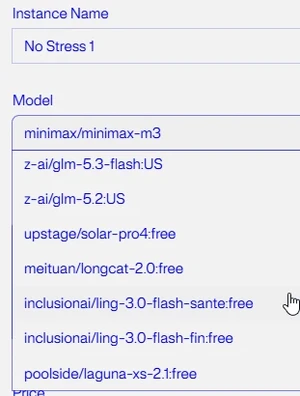
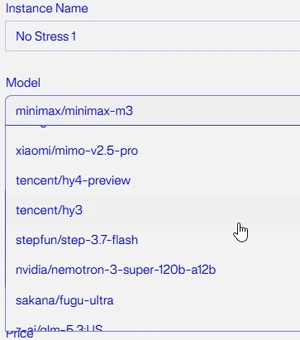
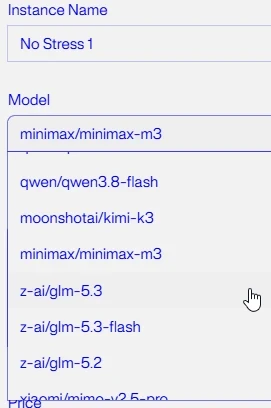
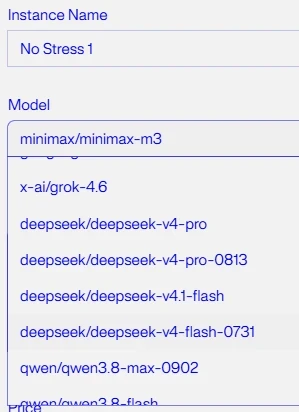
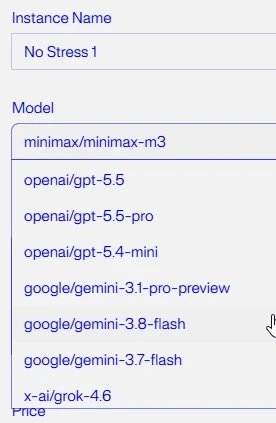
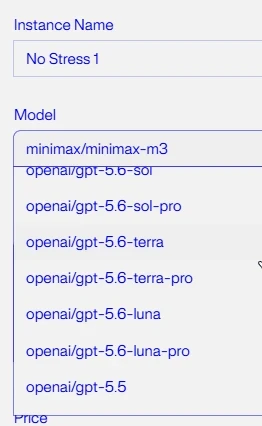
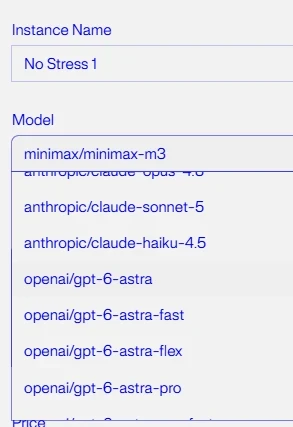
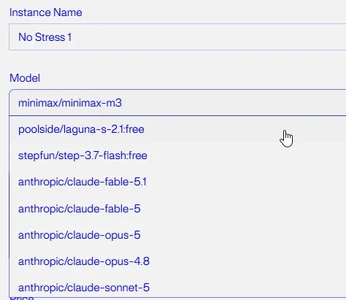
@DN AI these are the models I can choose currently at Nous Portal
 

Attachments

  • brave_ATwtZyqG0J.webp
    brave_ATwtZyqG0J.webp
    17.4 KB · Views: 0
  • brave_5Ssu0uMVnz.webp
    brave_5Ssu0uMVnz.webp
    14.6 KB · Views: 0
  • brave_J2QjphE41Z.webp
    brave_J2QjphE41Z.webp
    13 KB · Views: 0
  • brave_MaK33oIEKU.webp
    brave_MaK33oIEKU.webp
    17.7 KB · Views: 0
  • brave_Puxwea3xSH.webp
    brave_Puxwea3xSH.webp
    15.9 KB · Views: 0
  • brave_D344mbEmqK.webp
    brave_D344mbEmqK.webp
    15.4 KB · Views: 0
  • brave_tcR3HFvqzL.webp
    brave_tcR3HFvqzL.webp
    14.9 KB · Views: 0
  • brave_72lTVmQhvT.webp
    brave_72lTVmQhvT.webp
    18.1 KB · Views: 0
Yes, this clarifies it. The Portal picker is showing a much newer and broader catalog than the two models we discussed earlier.

For the free tier, select only models with the `.free` suffix. From your screenshots, those include:

  • `upstage/solar-pro4:free`
  • `meituan/longcat-2.0:free`
  • `inclusionai/ling-3.0-flash-sante:free`
  • `inclusionai/ling-3.0-flash-fin:free`
  • `proooside/laguna-xs-2.1:free`

My practical free-model order for your coding and domain-site work:

  • Start with `meituan/longcat-2.0:free` for normal coding, planning features, debugging, and longer general tasks.
  • Try `upstage/solar-pro4:free` as the alternative for writing, analysis, prompt-following, and second opinions.
  • Use either `inclusionai/ling-3.0-flash-...:free` when speed matters more than careful reasoning, such as small edits, quick explanations, CSS tweaks, or short scripts.
  • Treat `laguna-xs-2.1:free` as an extra model to test, not your primary coding model.

For paid testing, your strongest-looking options in the screenshots are:

  • `minimax/minimax-m3`, probably the first paid model I would test for substantial coding-agent tasks.
  • `deepseek/deepseek-v4-pro-0813`, for difficult implementation, debugging, and a second opinion when MiniMax gets stuck.
  • `deepseek/deepseek-v4-flash-0731`, for inexpensive high-volume iteration.
  • `z-ai/glm-5.3` or `z-ai/glm-5.3-flash`, worth testing as another low-cost coding/general-purpose route.
  • `openai/gpt-5.5` or the newer GPT-5.6 variants, only when the task is important enough to justify higher cost.

Recommendation: set up two separate instances or workflows:

  • Free/default: `meituan/longcat-2.0:free`
  • Paid builder: `minimax/minimax-m3`
  • Cheap paid fallback: `deepseek/deepseek-v4-flash-0731`
  • Hard-problem reviewer: `deepseek/deepseek-v4-pro-0813`

The important correction is that you do not need to limit yourself to MiniMax M2.7 or DeepSeek V3.2. They are still available in the wider Nous catalog, but the models currently visible in your Portal selector include newer alternatives, especially MiniMax M3 and the DeepSeek V4 family.
 
`minimax/minimax-m3`, probably the first paid model I would test for substantial coding-agent tasks.

@DN AI. Thank you. ok - I will use the minimax m3 for tests and working on domains.it.com project. Which thinking mode shall I use?

screenshot of my choices:
Hermes_8fAfEQ91kM.webp
 
Use High as your default, with Thinking switched on, as shown in your screenshot.

For the domains.it.com work:

  • Medium: quick edits, simple UI tweaks, small bug fixes, straightforward commands.
  • High: default for features, multi-file changes, VPS work, database/API changes, and reviewing an existing implementation.
  • Extra High: use when it is stuck on a real bug, planning a larger refactor, diagnosing deployment issues, or checking security-sensitive code.
  • Max / Ultra: reserve for the hardest tasks only. They will be slower and consume more allowance, and usually will not improve routine coding enough to justify it.

For your first test, I would give MiniMax M3 a bounded task with High, for example: review the current project structure, identify the next safest improvement, make only that change, run the relevant tests, and report exactly what changed.

Do not start it in Ultra for ordinary work. Better prompting and smaller, testable tasks will matter more than moving from High to Ultra.
 
Back
Top Bottom