- Joined
- Aug 24, 2004
- Messages
- 343
- Reaction score
- 86
This post reflects my personal perspective and experience with brandable domains, especially expired ones. It’s shared purely for discussion and reference, not as advice or a fixed framework.
Toward the end, I’ll also use three brand domains I picked up recently as a simple example to illustrate how I approach brand repositioning.
From my experience, serious domain investors rarely decide on expired domains on the drop day itself. Most decisions are made well in advance.
That said, the majority of people still focus heavily on residual traffic, SEO metrics, domain age, and how many other TLDs are registered. Most algorithms and automated valuation systems are built around these signals. Once a domain scores high, it naturally attracts attention and competition.
The problem is that very few of these domains ever end up in the hands of real end users.
I’ve seen the same pattern many times. Domains circulate among investors, get flipped back and forth, and eventually drop again once the residual traffic fades. The algorithmic score often doesn’t change much, so the next wave of investors chases the same name again. It becomes a loop driven by scores, not by real brand demand.
Because of this, when it comes to expired domains, I focus on one thing only: brandable domains.
For brand domains, historical traffic and SEO signals are mostly secondary. What really matters is narrative potential, the ability for a name to be redefined and repositioned. As long as there’s no serious negative history, a domain can often be given an entirely new meaning.
Every day, I run a large pool of expired domains through multiple automated filters. After several rounds of screening, I usually end up with around 600 two-word combinations. From there, I manually narrow the list down to about 10 serious candidates.
The next step is the most critical one: manual background checks.
This step can’t be skipped.
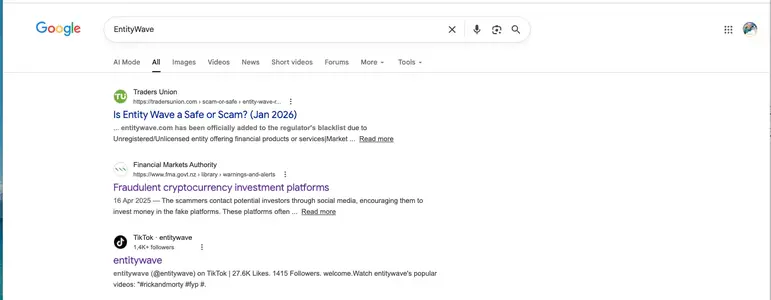
For example, not long ago, the domain EntityWave dropped. Algorithmic scores and automated valuations were relatively high. However, a quick background check showed that the name had been flagged by multiple financial regulators in different countries. Regardless of the metrics, that immediately disqualified it for me.
Next, I look at what industry the domain was previously associated with and whether the name is already strongly tied to a specific brand or service.
Even without a registered trademark, if search results overwhelmingly point to a single established entity, owning the same name offers little upside. Apart from type-in traffic, there’s almost no real benefit. These are domains I deliberately avoid.
The domains I like most usually share these traits:
Most importantly, because their algorithmic scores are often mediocre, they attract little competition and can be acquired cheaply.
This is ideal ground for brand repositioning.
I recently put together a small showcase based on three brand names I picked up around the same time: DutyBeauty, MetalPink, and PinkPace. DutyBeauty and MetalPink were both acquired at the starting price during the pre-release stage, while PinkPace was hand-registered for the standard registration fee.
PinkPace had a very low algorithmic score. I initially considered using a discounted backorder, but based on past experience, this approach almost always loses to platform partners and the name eventually ends up in portfolios like HugeDomains. I changed strategy and registered it manually instead. The success rate of this approach has been around 50 percent for me, and in some cases the name is still available even the next day.
 SHOWCASE: 3 Brandable Domains for the Modern Professional Women Segment

Atom estimates at the time:
GoDaddy estimates:
GoDaddy valuations tend to be conservative. The fact that DutyBeauty still received a 3,794 estimate suggests its score wasn’t low.
PinkPace is more interesting. The two valuations were very close, which, in my view, suggests Atom may have underestimated it.
From a brand repositioning perspective, PinkPace actually has the most long-term potential among the three.
Ironically, its short and limited usage history kept its score low, which is precisely why it was accessible in the first place.
Here’s the part I found most interesting.
After listing the three domains on Atom, PinkPace passed the Premium review very quickly and was listed with a BIN of 3,899. This highlights the gap between algorithmic scoring and human evaluation of brand potential.
After I repackaged the three domains into a small themed showcase, I received a 1,000 offer the very next day. I declined, believing there was room for a higher outcome.
Even if I had accepted that offer, the return would still have been roughly 20x.
This is where I think expired brand domains are often misunderstood.
They don’t rely on traffic.
They don’t rely on SEO.
They only gain value after they’re reframed and reinterpreted.
Scores tend to repeat themselves.
Brands, if handled correctly, get a second life.
Toward the end, I’ll also use three brand domains I picked up recently as a simple example to illustrate how I approach brand repositioning.
From my experience, serious domain investors rarely decide on expired domains on the drop day itself. Most decisions are made well in advance.
That said, the majority of people still focus heavily on residual traffic, SEO metrics, domain age, and how many other TLDs are registered. Most algorithms and automated valuation systems are built around these signals. Once a domain scores high, it naturally attracts attention and competition.
The problem is that very few of these domains ever end up in the hands of real end users.
I’ve seen the same pattern many times. Domains circulate among investors, get flipped back and forth, and eventually drop again once the residual traffic fades. The algorithmic score often doesn’t change much, so the next wave of investors chases the same name again. It becomes a loop driven by scores, not by real brand demand.
 Why I focus only on brandable domains
Because of this, when it comes to expired domains, I focus on one thing only: brandable domains.
For brand domains, historical traffic and SEO signals are mostly secondary. What really matters is narrative potential, the ability for a name to be redefined and repositioned. As long as there’s no serious negative history, a domain can often be given an entirely new meaning.
Every day, I run a large pool of expired domains through multiple automated filters. After several rounds of screening, I usually end up with around 600 two-word combinations. From there, I manually narrow the list down to about 10 serious candidates.
The next step is the most critical one: manual background checks.
This step can’t be skipped.
For example, not long ago, the domain EntityWave dropped. Algorithmic scores and automated valuations were relatively high. However, a quick background check showed that the name had been flagged by multiple financial regulators in different countries. Regardless of the metrics, that immediately disqualified it for me.
 When a name is already “owned” by the market
Next, I look at what industry the domain was previously associated with and whether the name is already strongly tied to a specific brand or service.
Even without a registered trademark, if search results overwhelmingly point to a single established entity, owning the same name offers little upside. Apart from type-in traffic, there’s almost no real benefit. These are domains I deliberately avoid.
 My favorite type of expired brand domain
The domains I like most usually share these traits:
- They once had a real website
- They later dropped and were held by investors
- Ideally, they were held for years by large portfolio holders such as HugeDomains
- They failed to sell and eventually dropped again
Most importantly, because their algorithmic scores are often mediocre, they attract little competition and can be acquired cheaply.
This is ideal ground for brand repositioning.
 A simple practical example
I recently put together a small showcase based on three brand names I picked up around the same time: DutyBeauty, MetalPink, and PinkPace. DutyBeauty and MetalPink were both acquired at the starting price during the pre-release stage, while PinkPace was hand-registered for the standard registration fee.
PinkPace had a very low algorithmic score. I initially considered using a discounted backorder, but based on past experience, this approach almost always loses to platform partners and the name eventually ends up in portfolios like HugeDomains. I changed strategy and registered it manually instead. The success rate of this approach has been around 50 percent for me, and in some cases the name is still available even the next day.
SHOWCASE: 3 Brandable Domains for the Modern Professional Women Segment Automated valuations before acquisition
Atom estimates at the time:
- DutyBeauty.com: 7,799
- MetalPink.com: 2,899
- PinkPace.com: 1,899
GoDaddy estimates:
- DutyBeauty.com: 3,794
- MetalPink.com: 1,584
- PinkPace.com: 1,488
GoDaddy valuations tend to be conservative. The fact that DutyBeauty still received a 3,794 estimate suggests its score wasn’t low.
PinkPace is more interesting. The two valuations were very close, which, in my view, suggests Atom may have underestimated it.
 Scores vs. brand repositioning
From a brand repositioning perspective, PinkPace actually has the most long-term potential among the three.
Ironically, its short and limited usage history kept its score low, which is precisely why it was accessible in the first place.
 What happened after listing
Here’s the part I found most interesting.
After listing the three domains on Atom, PinkPace passed the Premium review very quickly and was listed with a BIN of 3,899. This highlights the gap between algorithmic scoring and human evaluation of brand potential.
After I repackaged the three domains into a small themed showcase, I received a 1,000 offer the very next day. I declined, believing there was room for a higher outcome.
Even if I had accepted that offer, the return would still have been roughly 20x.
 Final thoughts
This is where I think expired brand domains are often misunderstood.They don’t rely on traffic.
They don’t rely on SEO.
They only gain value after they’re reframed and reinterpreted.
Scores tend to repeat themselves.
Brands, if handled correctly, get a second life.