


- Joined
- Oct 12, 2023
- Messages
- 249
- Reaction score
- 43
Every winter, I slow down just enough to read with intention. Not to chase trends, but to sharpen how I think about technology, creativity, and building things that last. This year’s holiday reading list reflects that mindset.
If you are a founder, IT leader, or small business owner thinking about the next phase of your online presence, these books help frame bigger questions. Who controls digital infrastructure? How do humans stay central in an AI-driven world? And how do we explain complex ideas clearly as our businesses grow?
Below are five books to read this winter that shaped my thinking going into 2026. This holiday reading list builds on themes I explored in last year’s reading list and earlier book recommendations. The focus keeps shifting from tools to systems, and from speed to sustainability.
Source: Amazon
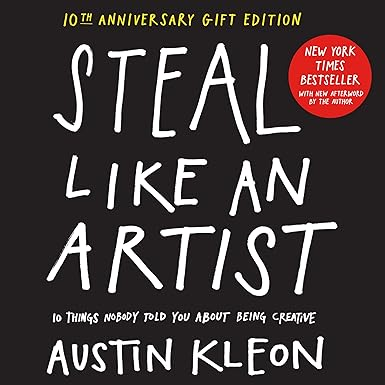
Although published over a decade ago, Steal Like an Artist feels newly relevant in the age of AI-generated content. Kleon argues that creativity is not about inventing from nothing, but about remixing ideas, learning, and showing your thinking publicly.
For small business owners, this mindset lowers the barrier to building a personal or company brand by sharing process over polish. You do not need to sound finished. You need to sound real. Short chapters, visual structure, and clear examples make this an easy winter read with lasting impact.
Source: Amazon
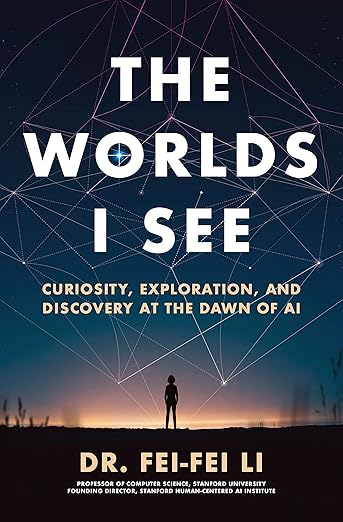
The Worlds I See is a science memoir, but it reads like a human story first. Often called the “Godmother of AI”, Dr. Fei-Fei Li connects her personal journey as an immigrant with the rise of modern AI research. Hailed as one of the Best Books of 2023 by Financial Times, this book uses storytelling to illuminate the relationship between humans and machines.
For entrepreneurs and IT leaders, the value lies in how clearly it shows that technology does not evolve in isolation. Ethics, empathy, and lived experience shape innovation. According to Pew Research, over 50% of Americans express concern about how AI is developed and used. Books like this help explain why trust matters as much as performance.
This is one of the books you need to read if you want a grounded view of AI beyond headlines and hype.
Source: Amazon
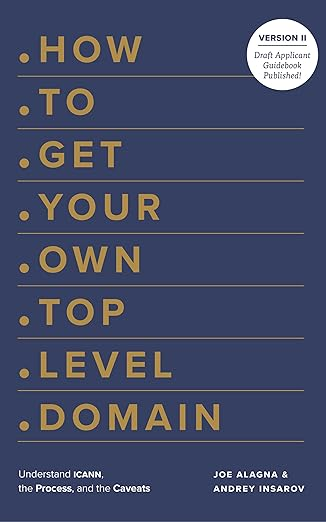
The book by Joe Alagna, Chief Strategy Officer at it.com Domains, which I was honored to co-author, How to Get Your Own Top Level Domain explores one of the most ambitious ideas in the domain name industry: running your own top-level domain. It explains how internet naming works behind the scenes and what it takes to apply for and operate a TLD.
What matters most is the shift in perspective. Domains are not treated as marketing assets, but as infrastructure. Control over naming systems becomes leverage. For founders building platforms, ecosystems, or communities, this reframing is important.
ICANN data shows there are over 1,500 delegated new gTLDs worldwide, yet only a small percentage are brand-owned. That gap suggests how early we still are in understanding domains as strategic territory rather than simple web addresses.
Source: Amazon
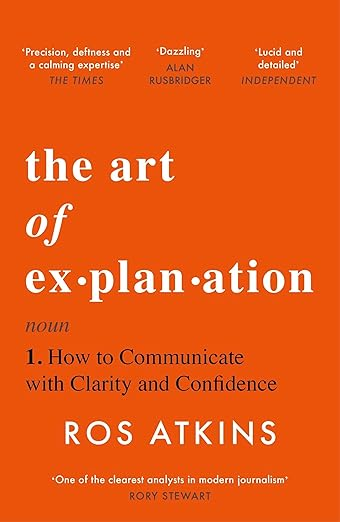
Clear communication is an underrated competitive advantage. The Art of Explanation breaks down how to explain complex topics step by step, without oversimplifying or overwhelming the audience.
For entrepreneurs, this applies everywhere: investor decks, onboarding flows, pricing pages, and AI-generated answers. Studies consistently show that clarity and scannability improve user comprehension and trust. Atkins provides a practical framework for achieving both.
Source: Amazon
This novel follows two friends who build video games together. Tomorrow, and Tomorrow, and Tomorrow is not a business manual, but it captures the emotional reality of creating things with other people.
Ambition, disagreement, loyalty, and failure all appear. For founders and product builders, the story mirrors real partnerships. As the co-founder conflict is one of the leading causes of startup failure, fiction like this helps explore those dynamics in a way non-fiction often cannot.
It is also a reminder that behind every product is a human story.
This reading list is not a productivity stack or a list of “quick wins.” It is a list designed to stretch perspective. Some titles are practical. Others are reflective. Together, they speak to ownership, creativity, communication, and human connection in technology-driven businesses. These are books to read in 2026 if you are building something meant to last.
In a search for inspiration? Visit it.com Domains blog and follow us on social media.
Continue reading on the it.com Domains blog...
If you are a founder, IT leader, or small business owner thinking about the next phase of your online presence, these books help frame bigger questions. Who controls digital infrastructure? How do humans stay central in an AI-driven world? And how do we explain complex ideas clearly as our businesses grow?
Below are five books to read this winter that shaped my thinking going into 2026. This holiday reading list builds on themes I explored in last year’s reading list and earlier book recommendations. The focus keeps shifting from tools to systems, and from speed to sustainability.
Steal Like an Artist (2012) by Austin Kleon
Source: Amazon
Although published over a decade ago, Steal Like an Artist feels newly relevant in the age of AI-generated content. Kleon argues that creativity is not about inventing from nothing, but about remixing ideas, learning, and showing your thinking publicly.
For small business owners, this mindset lowers the barrier to building a personal or company brand by sharing process over polish. You do not need to sound finished. You need to sound real. Short chapters, visual structure, and clear examples make this an easy winter read with lasting impact.
The Worlds I See: Curiosity, Exploration, and Discovery at the Dawn of AI (2023) by Dr. Fei-Fei Li
Source: Amazon
The Worlds I See is a science memoir, but it reads like a human story first. Often called the “Godmother of AI”, Dr. Fei-Fei Li connects her personal journey as an immigrant with the rise of modern AI research. Hailed as one of the Best Books of 2023 by Financial Times, this book uses storytelling to illuminate the relationship between humans and machines.
For entrepreneurs and IT leaders, the value lies in how clearly it shows that technology does not evolve in isolation. Ethics, empathy, and lived experience shape innovation. According to Pew Research, over 50% of Americans express concern about how AI is developed and used. Books like this help explain why trust matters as much as performance.
This is one of the books you need to read if you want a grounded view of AI beyond headlines and hype.
How to Get Your Own Top Level Domain: Understand ICANN, the Process, and the Caveats (2025) by Joe Alagna and Andrey Insarov
Source: Amazon
The book by Joe Alagna, Chief Strategy Officer at it.com Domains, which I was honored to co-author, How to Get Your Own Top Level Domain explores one of the most ambitious ideas in the domain name industry: running your own top-level domain. It explains how internet naming works behind the scenes and what it takes to apply for and operate a TLD.
What matters most is the shift in perspective. Domains are not treated as marketing assets, but as infrastructure. Control over naming systems becomes leverage. For founders building platforms, ecosystems, or communities, this reframing is important.
ICANN data shows there are over 1,500 delegated new gTLDs worldwide, yet only a small percentage are brand-owned. That gap suggests how early we still are in understanding domains as strategic territory rather than simple web addresses.
The Art of Explanation: How to Communicate with Clarity and Confidence (2023) by Ros Atkins
Source: Amazon
Clear communication is an underrated competitive advantage. The Art of Explanation breaks down how to explain complex topics step by step, without oversimplifying or overwhelming the audience.
For entrepreneurs, this applies everywhere: investor decks, onboarding flows, pricing pages, and AI-generated answers. Studies consistently show that clarity and scannability improve user comprehension and trust. Atkins provides a practical framework for achieving both.
Tomorrow, and Tomorrow, and Tomorrow (2022) by Gabrielle Zevin
Source: Amazon
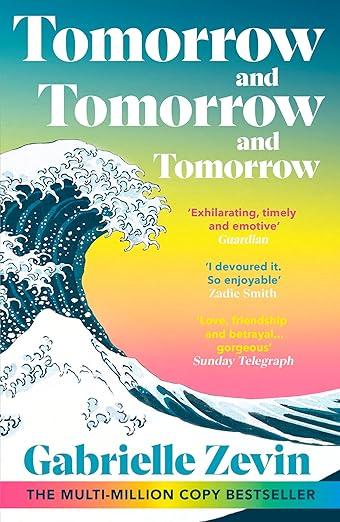
This novel follows two friends who build video games together. Tomorrow, and Tomorrow, and Tomorrow is not a business manual, but it captures the emotional reality of creating things with other people.
Ambition, disagreement, loyalty, and failure all appear. For founders and product builders, the story mirrors real partnerships. As the co-founder conflict is one of the leading causes of startup failure, fiction like this helps explore those dynamics in a way non-fiction often cannot.
It is also a reminder that behind every product is a human story.
This reading list is not a productivity stack or a list of “quick wins.” It is a list designed to stretch perspective. Some titles are practical. Others are reflective. Together, they speak to ownership, creativity, communication, and human connection in technology-driven businesses. These are books to read in 2026 if you are building something meant to last.
In a search for inspiration? Visit it.com Domains blog and follow us on social media.
Continue reading on the it.com Domains blog...

