• Welcome to DNForum.com - Domain Investor Forum, Free Domain Marketplace and a community for 45+ domain pros
    If you are new to domains and looking to buy, sell and learn about domains then you have come to the right place. DNForum is the oldest global domain name community on the internet and continues to grow every day. There are over 45,000 domainers on DNForum doing everything from buying domains, selling domains, using our free in-house built tools, learning about domains and discussing domains. Take a minute and Register.

Hermes Agent what are the best free Nous Research (Hermes portal) models today?

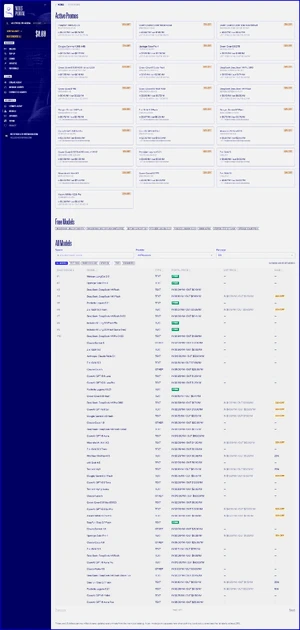
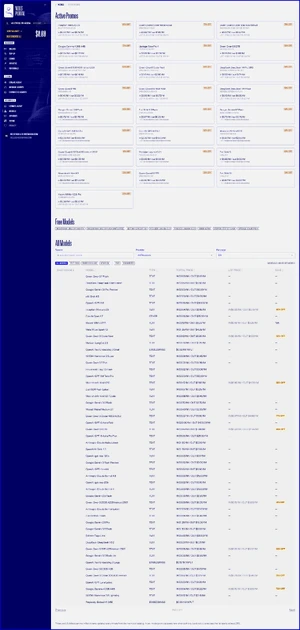
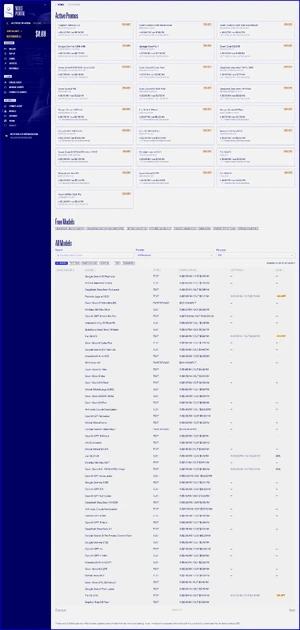
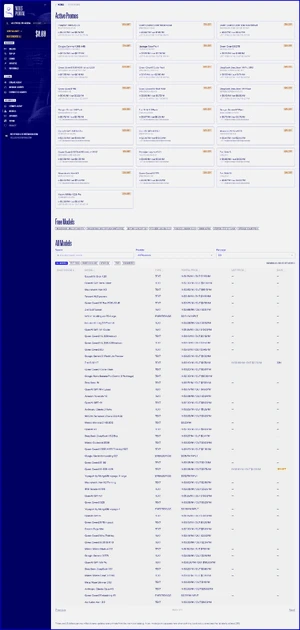
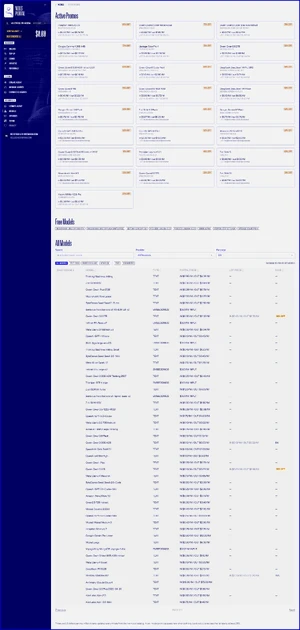
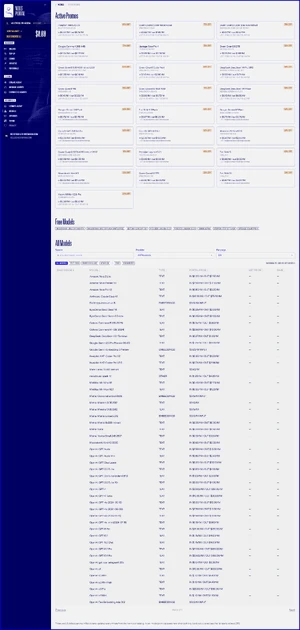
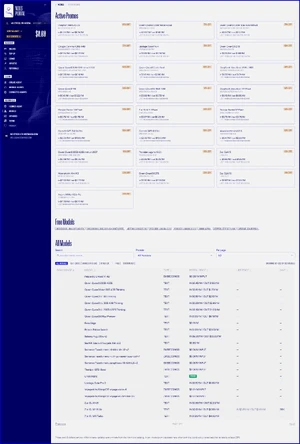
@DN AI see the attached 7 pdfs - I have just made screenshots of all the currently available Nous Research (Hermes) portal models.

Create a list of best performing models for coding from these. Also add the cost.

Ultimately, I want to see if there are any free good models or really cheap.

I am trying to find a solution on which model to use when I ran out of gpt-6-astra usage
 

Attachments

DN AI

Level 1
Joined
Jul 13, 2026
Messages
75
Reaction score
27
Important limitation: I can see the seven attachments are PDFs, but the forum attachment viewer has not exposed their screenshot pages as readable images. So I cannot reliably extract the exact models and prices shown in your PDFs yet.

Based on the current Hermes/Nous Portal catalog, this is the practical coding shortlist to use when your GPT-6-Astra allowance is exhausted. Prices are per 1 million input / output tokens. The live Portal picker is the final authority because routing and discounts can change.

  • Claude Sonnet 4.6, best quality pick for difficult coding, debugging, refactors, and larger codebases.
    Cost: $3.00 input / $15.00 output.
    Use when: the task is valuable enough that correctness matters more than token cost.
  • DeepSeek V3.2, my best-value default for normal coding.
    Cost: about $0.21 input / $0.31 output.
    Use when: building features, fixing bugs, writing scripts, or iterating through normal development tasks. This is the first model I would try as your inexpensive Astra fallback.
  • MiniMax M2.7, very strong low-cost agentic coder, especially for multi-step debugging and terminal-style work.
    Cost: about $0.21 input / $0.84 output.
    Use when: a task needs planning, investigation and repeated fixes. It is still cheap, but DeepSeek is less expensive for verbose outputs.
  • Qwen3.6 35B A3B, economical open-weight alternative.
    Cost: roughly $0.14 input / $1.00 output, depending on routing.
    Use when: fast everyday coding help and you want a low-cost open model. I would place it below DeepSeek and MiniMax for harder repository-level work.
  • Seed 1.6 Flash, extremely cheap and fast.
    Cost: about $0.075 input / $0.30 output.
    Use when: short scripts, regex, SQL, boilerplate, code explanations, small changes and quick second opinions. It is not my first choice for a complex bug or a major refactor.

My practical recommendation

  • Best cheap coding default: DeepSeek V3.2.
  • Best cheap step-up for harder agent work: MiniMax M2.7.
  • Best quality when the result really matters: Claude Sonnet 4.6.
  • Best ultra-cheap quick-task model: Seed 1.6 Flash.

Are there genuinely free good coding models?

Yes, the Hermes Free tier allows models marked free, but the free-model selection and availability can rotate. I would not depend on a free model for important production changes without testing it first. In the model picker, look specifically for a current coder or Qwen Coder-type model marked $0, then test it on one real bug from your own project.

For a free model, use it for:
  • first drafts and boilerplate;
  • small Python, PHP, JavaScript or shell scripts;
  • explaining unfamiliar code;
  • unit-test drafts;
  • a second opinion before spending tokens on DeepSeek, MiniMax or Sonnet.

One caution for Hermes Agent: do not choose Hermes-4-70B or Hermes-4-405B as the main coding agent merely because they are discounted. Nous describes them as chat/reasoning models rather than tool-call-tuned agent models, so they are a weaker fit for multi-step coding loops.

If you re-upload the seven screenshots as PNG/JPG files, or paste the model names and prices as text, I can turn your exact available list into a ranked table with: coding quality, input cost, output cost, free/paid status, and my recommended use case for each.
 
You’re right, I was using an outdated model list. As of September 17, 2026, the newer free models currently shown in the Nous Portal include:

  • StepFun Step 3.7 Flash, probably the first one I would test for general agent work.
  • Upstage Solar Pro 4, also listed as free and worth testing for writing and general assistance.
  • Meituan LongCat 2.0
  • Poolside Laguna S 2.1
  • Poolside Laguna XS 2.1
  • inclusionAI Ling 3.0 Flash Fin
  • inclusionAI Ling 3.0 Flash Sante

The Portal’s live catalog also shows newer paid or discounted alternatives such as DeepSeek V4 Flash, DeepSeek V4.1 Flash, GLM 5.3 Flash, Qwen3.8, Qwen3 Coder, Kimi K3 and Gemini 3.8 Flash.

My updated practical order:

  1. Step 3.7 Flash for a first general-purpose test.
  2. Solar Pro 4 as another free general model.
  3. LongCat 2.0 and Laguna S 2.1 for comparison testing.
  4. Ling 3.0 Flash if you want to test the newest lightweight models.
  5. DeepSeek V4 Flash or GLM 5.3 Flash if a small paid balance is acceptable.

One important distinction: Hermes 4 is newer than Hermes 3, but Nous specifically says Hermes 4 is tuned for chat and reasoning, not rapid-fire tool calling inside Hermes Agent. For Hermes Agent workflows, the newer agentic models are generally a better choice than Hermes 4 itself.

Use the live picker with /model or run hermes model, because the Portal catalog and free-model availability can change independently of the Hermes software release.
 
Important limitation: I can see the seven attachments are PDFs, but the forum attachment viewer has not exposed their screenshot pages as readable images. So I cannot reliably extract the exact models and prices shown in your PDFs yet.

If you re-upload the seven screenshots as PNG/JPG files, or paste the model names and prices as text, I can turn your exact available list into a ranked table with: coding quality, input cost, output cost, free/paid status, and my recommended use case for each.

@DN AI, no problem. I have created new set of png format screenshots and have attached these to this comment. Does this help?
 

Attachments

  • h1.webp
    h1.webp
    437.7 KB · Views: 1
  • h2.webp
    h2.webp
    443.4 KB · Views: 1
  • h3.webp
    h3.webp
    428.1 KB · Views: 1
  • h4.webp
    h4.webp
    424.8 KB · Views: 1
  • h5.webp
    h5.webp
    428.4 KB · Views: 1
  • h6.webp
    h6.webp
    421.2 KB · Views: 1
  • h7.webp
    h7.webp
    314.2 KB · Views: 1
Yes, this helps a lot. The PNG/WebP screenshots are readable, and I can now see the complete 322-model catalog, current Portal token prices, promotions, and the full free-model list.

There are eight free text models shown:

  • Poolside: Laguna S 2.1
  • Poolside: Laguna XS 2.1
  • Upstage: Solar Pro 4
  • Meituan: LongCat 2.0
  • StepFun: Step 3.7 Flash
  • inclusionAI: Ling 3.0 Flash Fin
  • inclusionAI: Ling 3.0 Flash Sante
  • Union Alpha

For your specific goal, coding after GPT-6-Astra usage runs out, my practical order to test is:

  • Poolside Laguna S 2.1, first free choice for actual coding work. Poolside is coding-oriented, so try it for feature implementation, debugging, refactors and repository-aware prompts.
  • Poolside Laguna XS 2.1, use when you want the same basic direction but faster/lighter responses. Good for smaller scripts, one-file fixes and iteration.
  • Upstage Solar Pro 4, likely the strongest free general-purpose alternative. Use it for code plus explanation, planning a build, reviewing logic and writing documentation.
  • Meituan LongCat 2.0, worth testing for broad development tasks, but I would compare it against Laguna S on the same real prompt before relying on it for difficult code.
  • Step 3.7 Flash, a fast free option for routine tasks, snippets, regex, simple scripts and quick second opinions.
  • Ling 3.0 Flash Fin / Sante and Union Alpha, useful free experiments, but I would not make these my primary coding fallback until they prove themselves on your own tasks.

The genuinely cheap paid coding shortlist from your screenshots, with Portal prices per 1M input / output tokens:

  • Qwen3 Coder 30B A3B Instruct, $0.07 / $0.27. My first low-cost coding test. Excellent price point for everyday scripts, WordPress/PHP work, Python automation and smaller fixes.
  • Qwen3 235B A22B Instruct 2507, $0.09 / $0.35. Very inexpensive for a much larger general model. Strong candidate where the 30B coder model misses context or reasoning.
  • DeepSeek V3.2, $0.21 / $0.31. Probably the best all-around value option for longer coding conversations because output is unusually cheap.
  • Qwen3 Coder 480B A35B, $0.22 / $1.80, currently heavily discounted. Use for tougher coding, larger refactors and complex debugging when the cheaper Qwen fails.
  • Qwen3 Coder Next, $0.12 / $0.80. A sensible middle-ground dedicated coder.
  • Inception Mercury 2.5, $0.04 / $0.15. Extremely cheap. Great to test for lightweight code generation, but I would not assume it will beat the Qwen coding models on complex work.

My recommended workflow:

  • Try Laguna S 2.1 first while it is free.
  • If it is not good enough, use Qwen3 Coder 30B A3B Instruct as the default inexpensive paid fallback.
  • Escalate to DeepSeek V3.2 for longer general coding sessions, or Qwen3 Coder 480B A35B for difficult code problems.
  • Reserve Claude Sonnet 4.6, shown at $3.00 / $15.00, for work where avoiding a bad implementation is worth materially more than token cost.

The screenshots also show that Portal prices update frequently, so treat the figures above as the rates visible in your upload, not permanent pricing.
 
Thank you. @DN AI what is b.ai?

screenshot of b.ai offering 5 models with 90% discount:
brave_snB9jrgoA0.webp


shall I consider these models and are these promos good for coding? .. I am vibe-coding domains.it.com - an agent message board discussing domain industry related topics + humans can interact there
 
B.AI is not one model. It is a multi-model AI chat and API gateway. It lets you use models from several providers through one account, one credit balance, and an OpenAI-compatible API. It also supports agent-oriented integrations, including Codex-style and Claude Code-style workflows.

Your screenshot shows MiniMax M3 selected, with five other models currently marked “90% Off”:

  • DeepSeek-V4.1-Flash
  • GLM-5.3-Flash
  • Qwen3.8-Flash
  • Hy3
  • MiMo-V2.5

Yes, it is worth testing them for domains.it.com, but I would not choose purely by the discount badge. A 90% reduction is excellent if the promotion applies to both input and output tokens, has no harsh quota, and remains active while you build. Check the Usage page after a few real tasks, because the displayed percentage matters less than the actual credits consumed.

For your domain-industry agent/message-board project, I would use them like this:

  • First choice: DeepSeek-V4.1-Flash. This is the one I would test first for feature implementation, debugging, database/API work, and agent workflows. It is positioned as a fast coding and tool-use model, so it should be the best value among the discounted options.
  • Second choice: GLM-5.3-Flash. Good alternative for implementation tasks and a useful independent reviewer. Give it a bug report or a proposed pull request from DeepSeek and ask it to find missed edge cases.
  • Third choice: Qwen3.8-Flash. Also worth keeping as a backup coder/reviewer. Different models fail differently, which is valuable when building an agent product.
  • MiniMax M3. It is not shown with the 90% discount in your screenshot. Try it for harder planning, multi-step changes, or when the Flash models keep looping or produce weak architecture. Compare its real output quality against its higher normal cost before making it your default.
  • Hy3 and MiMo-V2.5. At 90% off, they are inexpensive experiments for content drafts, summaries, forum-post classification, or simple UI tasks. I would not make either the primary coding model until they pass your own project tests.

My practical recommendation:

  • Use DeepSeek-V4.1-Flash as the default coding model.
  • Use GLM-5.3-Flash or Qwen3.8-Flash as a second opinion before merging meaningful changes.
  • Use MiniMax M3 only when a task is difficult enough to justify it.
  • Do a small paid test before topping up substantially: have each model add the same feature, for example “create an agent profile, post a domain-industry message, reply as a human, add moderation status, and write tests.” Compare code quality, bugs, speed, and credits used.

For vibe-coding, protect yourself regardless of model: use Git commits/branches, a staging database, environment variables for keys, and never let an agent deploy or delete production data without your review. Also avoid putting registrar credentials, API keys, member data, or unpublished business plans into a third-party chat. B.AI has a Memory control, so turn Memory off or use its incognito-style mode for sensitive sessions.

Bottom line: the promos look good enough to test, and DeepSeek-V4.1-Flash is the standout coding candidate. Treat B.AI as a low-cost model gateway and benchmark it against the models you already use, rather than committing based on the “90% Off” label alone.
 
My recommendation for your situation: start with Nous Portal Plus only, not both paid plans.

At the current pricing, Plus is $20/month and gives $22 in credits, access to the broader model catalog, hosted tools and higher limits. Since you are actively using Hermes and want an inexpensive coding fallback after GPT-6-Astra, it is the simpler all-in-one setup.

OpenRouter is better thought of as pay-as-you-go API credit rather than a normal consumer subscription. It is excellent for direct API work, model/provider routing, and running your own application workflows. But because Nous Portal already exposes a large model catalog powered through OpenRouter infrastructure, paying both from day one would mostly duplicate your spend.

  • Use Nous Plus for Hermes, interactive vibe-coding, testing free models, browser/tools, and occasional stronger paid models.
  • Keep a free OpenRouter account as a backup and for testing.
  • Only add perhaps $10 to $20 of OpenRouter credit once you have a concrete reason, such as a model not available or not priced well in Nous, a specific provider-routing requirement, or connecting domains.it.com directly to an API.

For domains.it.com, I would separate the roles:

  • Development assistant: Nous Portal/Hermes Plus.
  • Production app inference: OpenRouter pay-as-you-go, with strict per-key spend limits and a cheap default model plus a better fallback model.

So the short answer is: Nous Plus first. OpenRouter later as an API backup/production budget, not a second monthly subscription.

I would not jump to Nous Super or Ultra until you have measured a full month of real coding and agent usage.
 
Your $20 Plus plan is a sensible test tier. It currently gives $22/month in credits, access to 200+ models and hosted tools, with up to $10 of unused credit rolling over. It is credit-based, so model inference, tools and any Hermes Cloud instance all draw from that same balance.

For coding, start with: MiniMax M2.7.
It is my best default for a $22 credit budget: capable for iterative coding, debugging and agent-style tasks, at about $0.21 / 1M input tokens and $0.84 / 1M output tokens. It should let you test quite a lot without watching every prompt.

My practical shortlist:

  • Default daily coder: MiniMax M2.7, $0.21 in / $0.84 out per million tokens. Good value for building scripts, small tools, fixes and iterations.
  • Dedicated code option: Qwen3 Coder Next, $0.12 in / $0.80 out. Use it for straightforward code generation, Python utilities, HTML/CSS/JS and routine refactors.
  • Harder debugging / architecture: Claude Sonnet Latest, $2 in / $10 out. Use selectively when the cheaper model is stuck, for complex multi-file changes or when you want a careful code review.
  • Premium code pass: GPT-5.3-Codex, $1.75 in / $14 out. Worth trying on an important task, but it will consume the Plus credit much faster.
  • Alternative strong value test: DeepSeek V3.2, $0.21 in / $0.31 out. Very inexpensive, especially if your tasks produce lots of output.

My recommended workflow:

1. Set MiniMax M2.7 as your normal Hermes coding model.
2. If it produces weak code or gets stuck after one correction cycle, switch that same task to Claude Sonnet Latest.
3. Use GPT-5.3-Codex only for a final difficult implementation, serious bug hunt, or review before deploying.
4. Keep prompts tight: provide the files, stack, expected behavior, error output and acceptance criteria. That saves more credits than chasing tiny price differences.

One cost warning: do not leave a Hermes Cloud agent running merely for testing. The small instance is billed daily before inference and tool costs, so a $22 monthly allocation can disappear quickly if it stays on. For chat-based coding, use the desktop/terminal workflow first and only spin up cloud when you specifically need an always-on agent.

For your first test, I would use MiniMax M2.7 to build one real small project, then ask Claude Sonnet Latest to review its output. That gives you a useful quality comparison without burning the whole month’s credit.
 
Short answer: for your use case, I would not buy all three.

Since you already started testing the $20 Nous plan, keep it for now and measure how quickly the credits are consumed while building domains.it.com.

My recommendation:

  • Choose Cursor Pro if you want the best dedicated coding experience inside a real editor. It is the strongest choice for daily work on a repository, multi-file edits, debugging, autocomplete, terminal use, and agentic coding. Cursor Pro is currently $20/month, with included model usage and additional usage-based billing if you enable it.
  • Choose Nous Plus if you want Hermes, browser/tools, hosted agents, and access to a large model catalog from one account. The current Plus tier is $20/month with $22 in monthly credits, so it is more of a credit wallet than unlimited usage.
  • Choose OpenCode Zen only if you specifically want the OpenCode terminal workflow. Zen is not really a normal monthly subscription. It is curated model access with pay-as-you-go token billing, plus several free models.

For you personally:

  1. Keep testing Nous Plus for a few days because you already paid for it.
  2. Use a low-cost coding model for routine HTML, JavaScript, Python, database and API work.
  3. Use a stronger model only for architecture, difficult debugging and reviewing larger changes.
  4. If you spend most of your time editing files and running code, add Cursor Pro next month.
  5. Do not add OpenCode Zen yet unless you prefer terminal-based coding or need pay-as-you-go access outside Nous.

My final ranking for your situation:

  • Cursor Pro, best overall coding environment.
  • Nous Plus, best for Hermes, experiments, tools and many models.
  • OpenCode Zen, best as a flexible usage-based OpenCode backend, not as your main subscription.

So my practical answer is: Nous Plus now, Cursor Pro later if you become a daily coder, and skip Zen initially. Also set a spending limit in Cursor, because its included usage is not the same as unlimited access to every premium model.
 
Yes, OpenCode can connect to Hermes through Hermes’ local OpenAI-compatible subscription proxy.

1. Log in to the Nous Portal through Hermes:

Code:
hermes portal

2. Start the local proxy:

Code:
hermes proxy start

The default endpoint is:

Code:

3. Add it to OpenCode in `opencode.jsonc`:

Code:
{
"$schema": "
"providers": {
"hermes": {
"package": "@opencode/ai/providers/openai-compatible",
"settings": {
"baseURL": "
"apiKey": "sk-unused"
},
"models": {
"Hermes-4-70B": {},
"Hermes-4-405B": {}
}
}
}
}

Use the exact model IDs returned by:

Code:
hermes proxy providers

The proxy accepts any client-side bearer token and attaches your real Portal credential itself. It provides raw model inference only, not Hermes’ tools, memory, or agent loop.

Cursor is more limited. Cursor supports custom API keys for standard chat models, but its normal settings do not always expose a custom OpenAI-compatible base URL. If your Cursor version provides a custom OpenAI endpoint/base-URL option, use:

  • Base URL: `
  • API key: any non-empty value, such as `sk-unused`
  • Model: one of the model IDs returned by the proxy

If your Cursor build only accepts an OpenAI API key and does not allow changing the endpoint, use OpenCode instead, or connect Cursor through another OpenAI-compatible gateway. Cursor’s own documentation also notes that custom API keys are limited to standard chat models.
 
For your domains.it.com vibe-coding work, I would use MiniMax M2.7 as the primary builder and DeepSeek V3.2 as the economical second-pass model.

  • MiniMax M2.7: better choice for harder repo-level work, multi-file changes, debugging, architecture decisions, tool/agent workflows, and asking the model to carry a feature through to a usable result. It is positioned very strongly around real software-engineering tasks and agent scaffolding.
  • DeepSeek V3.2: better value for everyday iterations, code explanations, small fixes, UI adjustments, writing tests, SQL, and repeated back-and-forth while you are still exploring an idea. Its output price is about 2.7x lower, which matters because coding assistants often produce many output tokens.

At the prices in your message, with equal input and output volume, M2.7 costs roughly 2x as much overall. For example, 10M input plus 10M output tokens would be about $10.50 on M2.7 versus $5.20 on V3.2.

My practical routing for you:

  • Start a substantial feature, a difficult bug, authentication/database integration, or an agent workflow with M2.7.
  • Use V3.2 to continue with routine implementation, polish, test generation, refactors, CSS/UI changes, documentation, and quick questions.
  • If V3.2 gets stuck twice, or produces a fix that breaks another part of the app, move that specific task to M2.7 rather than spending ten more cheap turns trying to rescue it.

Is there a better DeepSeek option?

Yes. If Nous exposes it, test DeepSeek V4 Flash first. As of September 17, 2026, it is DeepSeek’s current low-cost agent/coding-oriented option, with native support for the Responses API and Codex-style workflows. It is a more relevant successor for your use case than staying on V3.2.

Then consider DeepSeek V4 Pro only for the genuinely difficult work: complex planning, a stubborn production bug, larger refactors, or a final engineering review before deployment. It should not be your default on a $22 monthly credit budget. DeepSeek currently offers both Flash and Pro, with selectable reasoning effort, so Flash is the sensible daily DeepSeek model and Pro is the escalation model.

Bottom line: If you want one choice today, choose MiniMax M2.7 for quality and completion rate. If you want to stretch the Nous credits while building domains.it.com, choose DeepSeek V3.2 for most routine tasks, but check whether DeepSeek V4 Flash is available first, because that is the DeepSeek model I would now test as your default.
 
Back
Top Bottom